From December 13 to 14, the International Academic Seminar on China’s Long-Term Economic Development was held at the Puhe Campus of Liaoning University (LNU). As a parallel session of the 2025 International Industry-University-Research-Application Cooperation Conference (Northeast China’s Three Provinces and One Region), the seminar was hosted by the Division of Economics, LNU. It brought together experts and scholars from home and abroad to conduct in-depth discussions on the key factors shaping China’s economic development trajectory over centuries, as well as the historical background and practical breakthrough points of Northeast China’s revitalization. The event aimed to provide suggestions for promoting the development of new quality productive forces and the revitalization of old industrial bases. Yu Miaojie, Deputy Secretary of the Party Committee and President of LNU, attended the conference online and delivered a speech.
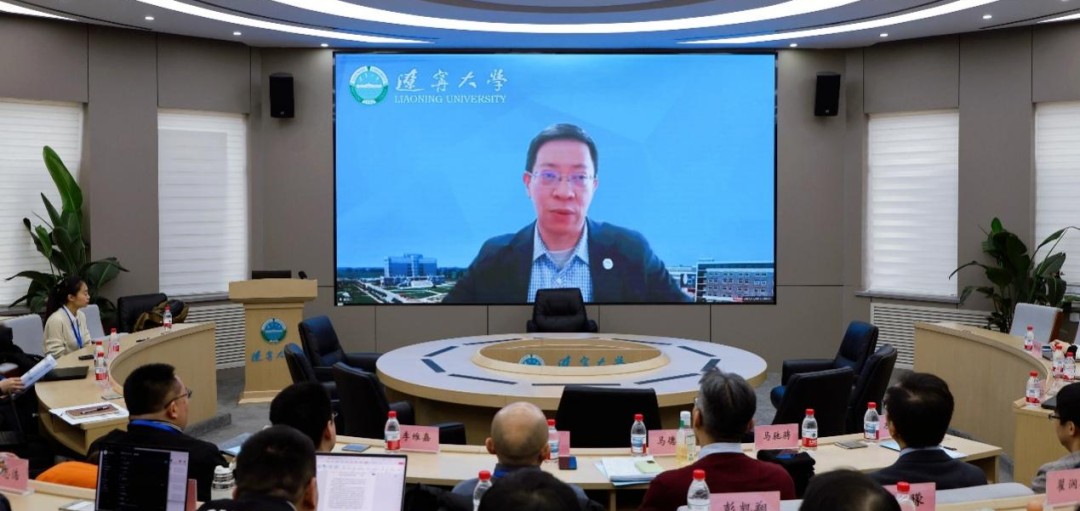
In his speech, Yu Miaojie stated that the seminar has gathered top academic forces in the field of economic history, building a high-end academic dialogue platform focusing on China’s long-term economic development and Northeast China’s revitalization. It has created a valuable opportunity for teachers and students of the university to face cutting-edge academic achievements and exchange ideas with experts from home and abroad.
Scholars including Ma Debin from Fudan University, Li Weijia from Monash University, Bai Ying from The Chinese University of Hong Kong, Ma Chicheng from The University of Hong Kong, Nong Xin from Hitotsubashi University, Yan Se from Peking University, Deng Hanzhi from Fudan University, and Xi Tianyang from Peking University adopted a long-term historical perspective. They focused on several key topics such as financial innovation, institutional change, state capacity, disaster relief, and the evolution of the fiscal system, sharing their latest research findings and academic insights. By conducting in-depth analysis of historical cases and economic phenomena, they explored the inherent logic and historical wisdom of China’s economic development, providing important references for the long-term and stable economic development of not only Northeast China, but for the whole country.
Scholars such as Zhang Xiaoming from Zhejiang University, Zhao Tianrui from Nankai University, Xie Bin from Jinan University, Xu Zhihao from Tsinghua University, Yang Guohao and Xiong Zeyuan from Liaoning University, Li Peiyuan from Duke Kunshan University, and Liu Yuan from South China Normal University shared their latest research results and policy insights in various research directions, including social mobility, information transmission efficiency, modern trade policy reform, disaster governance and public goods supply, and grass-roots finance and public service guarantee. They analyzed the inherent connection between economic phenomena and institutional innovation in different eras, extracted the underlying logic and resilience laws of China’s long-term economic development, and provided academic insights for the rooting of new quality productive forces and empowering high-quality economic development by drawing lessons from history.
Scholars such as Xue Meng from the London School of Economics and Political Science, Hu Sijie from The University of Hong Kong, Zhao Hongjun from Shanghai Normal University, Yuan Weipeng from Shanghai Jiao Tong University, Dong Baomin from Liaoning University, Cai Heqi from the University of Warwick, Luan Xiaoyang from Xiamen University, Peng Kaixiang from Wuhan University, Xu Zhiyin from Central University of Finance and Economics, Wu Meng from Xiamen University, and Zhai Runzhuo from Renmin University of China respectively reported relevant research covering multiple dimensions such as the evolution of the imperial examination system, the development of the fiscal system, national governance, financial innovation, the interaction between culture and economy, and grass-roots governance models. By analyzing economic development and institutional changes in different historical periods, they explored the institutional logic of China’s economic development, revealed the reference significance of research results for advancing Chinese-style modernization, and provided academic support for drawing wisdom from historical experience and promoting high-quality economic development in the contemporary era.
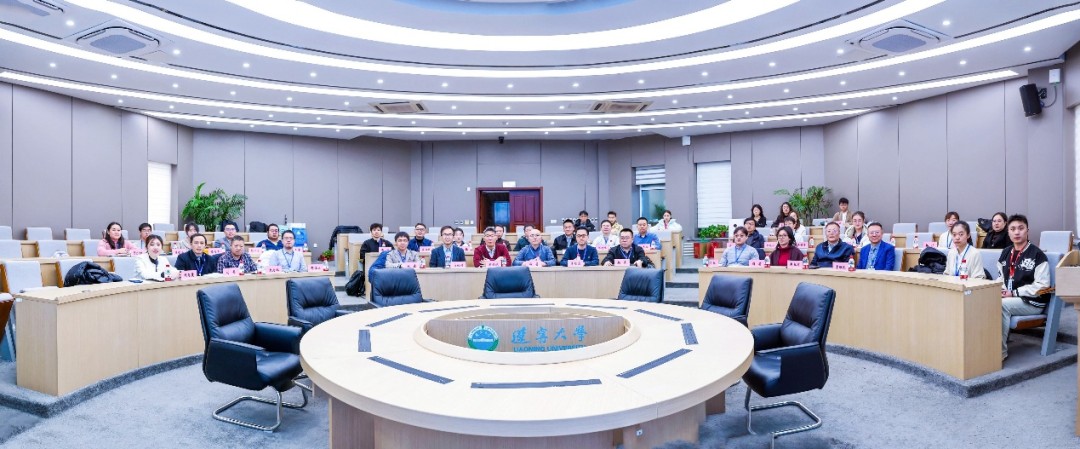
The conference received extensive attention and support from the academic community. Experts and scholars from well-known universities at home and abroad attended the conference, including the London School of Economics and Political Science, Monash University, Hitotsubashi University, the University of Warwick, The University of Hong Kong, The Chinese University of Hong Kong, Peking University, Tsinghua University, Fudan University, and Zhejiang University.