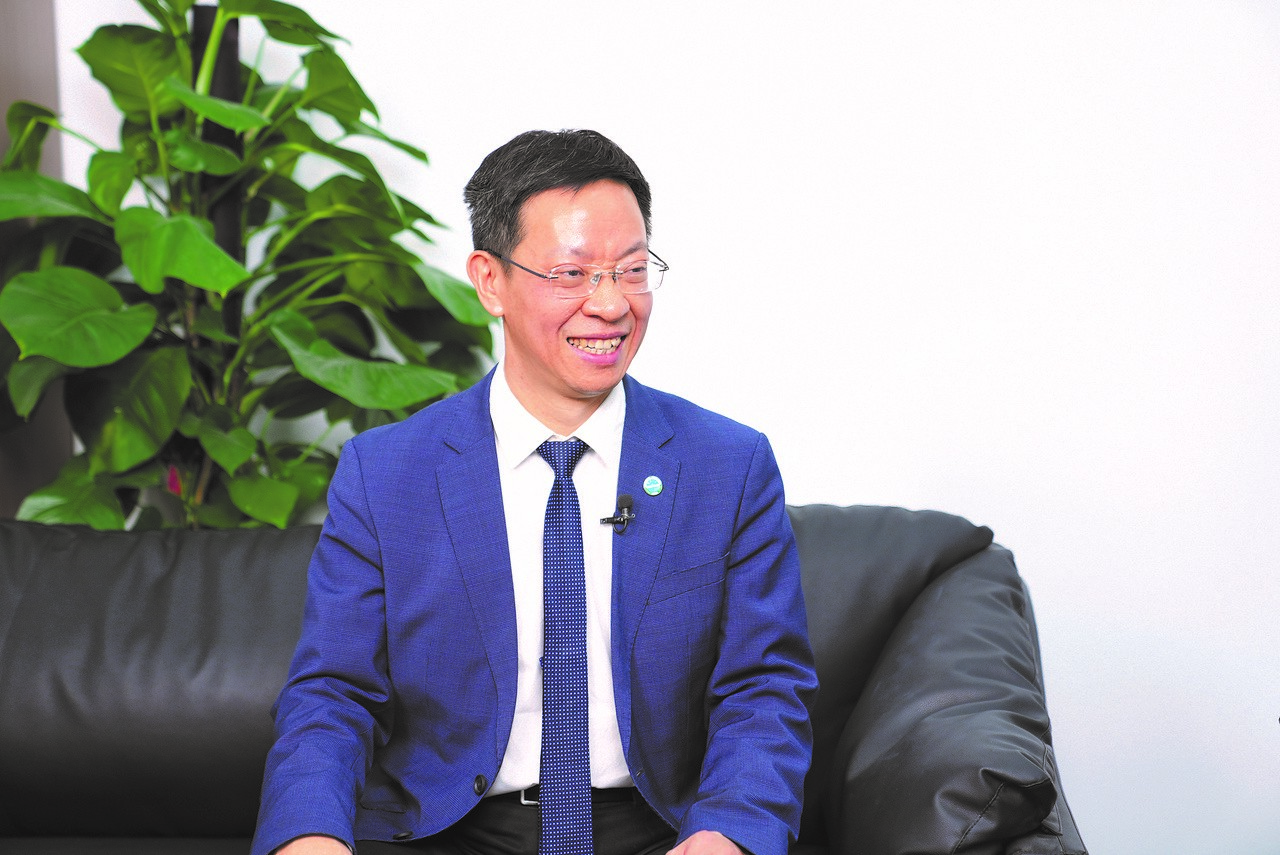
Expert Profile: Yu Miaojie is a deputy to the 14th National People’s Congress (NPC) and a specially appointed supervisor for the National Commission of Supervision. He serves as the President of Liaoning University (LNU). He is also a Fellow of the International Economic Association (IEA), the first Chinese recipient of the Royal Economic Society Prize, and a Distinguished Professor of a national-level program appointed by the Ministry of Education. He is a recipient of the National Science Fund for Distinguished Young Scholars and a Boya Distinguished Professor at Peking University. His primary research focuses on international trade, the world economy, and China’s economic development.
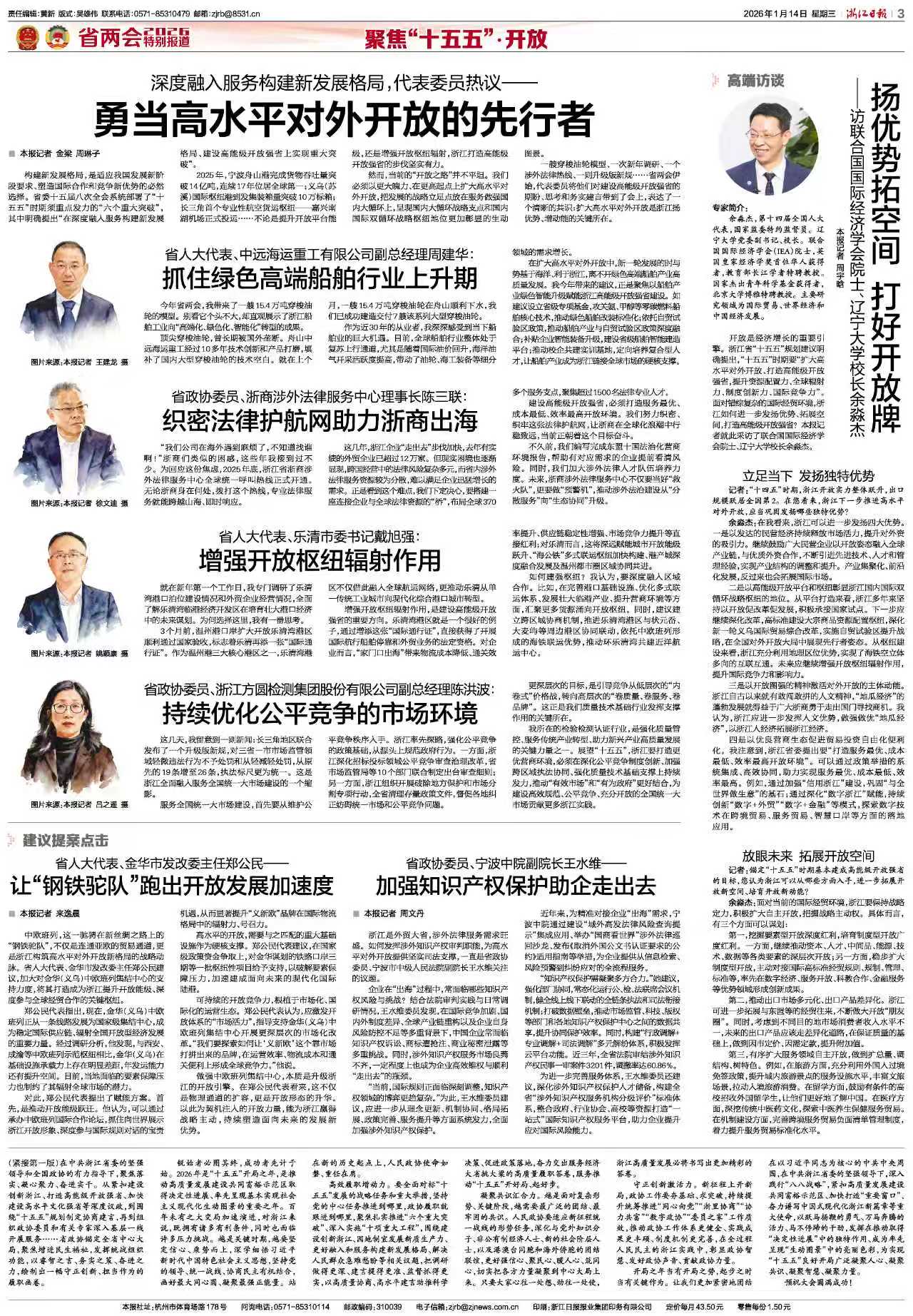
Openness serves as a crucial engine for economic growth. The proposal for Zhejiang Province’s 15th Five-Year Plan clearly states that during this period, the province must “expand high-level opening-up, build a high-capacity open economy, and enhance resource allocation capacity, global influence, institutional innovation, and international competitiveness.” Faced with a complex and evolving international trade environment, how can Zhejiang further leverage its strengths and broaden its horizons to build a high-capacity open economy? A reporter from our newspaper interviewed Yu Miaojie, Fellow of the International Economic Association and President of Liaoning University, on this topic.
Building on the Present and Leveraging Unique Strengths
Reporter: During the 14th Five-Year Plan period, Zhejiang’s overall openness has significantly improved, with its export scale rising to second place nationwide. In your view, what unique strengths should Zhejiang consolidate and leverage to advance high-level opening-up in the next step?
Yu Miaojie: In my opinion, Zhejiang can further leverage four major strengths. Firstly, it can continue to unleash market vitality through its vibrant private sector, enhancing its appeal to foreign investment. By encouraging private enterprises to integrate into global industrial chains with an open approach, collaborating with high-quality foreign capital, and continuously introducing advanced technologies, talent, and management expertise, Zhejiang can achieve industrial restructuring and upgrading. The clustering and frontier development of industries will, in turn, expand its international market presence.
Secondly, leveraging high-level open platforms and hubs to highlight Zhejiang’s role as a strategic pivot in domestic and international dual circulation. From the perspective of platform development, Zhejiang has long adhered to using openness to drive reform and development, actively undertaking national pilot initiatives. The next step should involve deepening reforms, constructing a high-standard hub for bulk commodity resource allocation, advancing a new phase of comprehensive reforms in Yiwu’s international trade, and implementing an upgrade strategy for the pilot free trade zone, demonstrating a pioneering stance in the national landscape of opening-up. Regarding hub development, Zhejiang has fully utilized its geographical advantages to achieve multi-dimensional connectivity by sea, rail, and air. Moving forward, efforts should continue to enhance the radiating role of open hubs, boosting international competitiveness and influence.
Thirdly, fostering a spirit of thriving through openness to energize the momentum of entities engaged in opening-up. Zhejiang has long been characterized by a pioneering and enterprising cultural spirit, with the thriving “sweet potato economy” benefiting from the courage of Zhejiang entrepreneurs to explore business opportunities abroad. In my view, Zhejiang should further leverage its cultural strengths, strengthen and refine the “sweet potato economy,” and expand the Zhejiang economy through the economic activities of its people.
Fourthly, fostering an optimal business ecosystem to promote trade and investment liberalization and facilitation. I have noted that the Zhejiang Provincial Party Committee has proposed to “create an open environment with optimal services, lowest costs, and highest efficiency.” This can be achieved through the systematic integration and efficient coordination of policy measures to help realize optimal services, lowest costs, and highest efficiency. For example, by strengthening the development of “Credit Zhejiang,” the foundation for “doing business with the world” can be solidified. Through the empowerment of “Digital Zhejiang,” continuous innovation in models such as “digital + foreign trade” and “digital + finance” can be pursued, exploring the practical application of digital technology in cross-border trade, service trade, smart ports, and other areas.
Looking to the Future and Expanding Openness Space
Reporter: With the goal of building a high-level open province by the end of the 15th Five-Year Plan period, from which aspects do you believe Zhejiang can further expand new openness spaces and cultivate new drivers for openness?
Yu Miaojie: In the face of the current international trade environment, Zhejiang must maintain strategic resolve, actively expand independent openness, and seize strategic initiative. Specifically, there are three areas to consider: Firstly, unlocking the deep-seated potential of factor-based openness while cultivating the broad benefits of institutional openness. On one hand, continue to promote deeper openness in various factors such as capital, talent, intermediate goods, energy, technology, and data. On the other hand, steadily advance institutional opening-up by proactively aligning with high-standard international trade rules, regulations, management practices, and standards. Zhejiang should aim to pioneer innovative outcomes in its areas of strength, including the digital economy, service sector openness, scientific and educational collaboration, and financial services.
Secondly, diversification of export markets and differentiation of export products should be promoted. Zhejiang can further expand economic and trade exchanges with ASEAN and other regions, continuously broadening its "network of partnerships" in opening-up. At the same time, considering the varying income levels of consumers in different destination markets, future export products should follow a differentiated approach. On the basis of ensuring quality, pricing and product designs should be tailored to market demands and specific needs, thereby enhancing added value.
Thirdly, self-driven opening in the service sector should be expanded in an orderly manner, with a focus on scaling up, adjusting structures, and building distinctive strengths. For example, in tourism, the policy of visa-free transit for foreigners should be fully utilized to improve service facilities at local tourist attractions, enrich cultural and tourism experiences, and boost inbound tourism consumption. In education, qualified universities should be encouraged to enroll international students, enabling them to better understand China. In healthcare, the rich heritage of traditional Chinese medicine and culture should be leveraged to explore trade in wellness and healthcare services. In terms of institutional development, the negative list management system for cross-border trade in services should be refined, with efforts focused on elevating the standardization of service trade.
Source: Zhejiang Daily
https://tidenews.com.cn/news.html?id=3346854&source=weixin