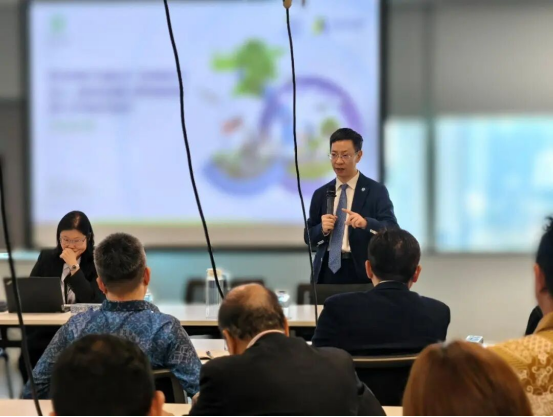
On April 9, Yu Miaojie, a deputy to the 14th National People’s Congress, Fellow of the International Economic Association, and President of Liaoning University was invited to lead a delegation to visit Khazanah Nasional, Malaysia’s sovereign wealth fund. He attended a high�level public lecture and delivered a keynote speech titled “Understanding China’s Strategy of All�Round Independent Opening�Up”。
The event was chaired by Datuk Hisham, Chief Investment Officer of Khazanah Nasional. Distinguished guests from political, business, and academic circles attended the lecture, including Deputy Minister of Finance of Malaysia Liew Chin Tong, Deputy Minister of International Trade and Industry of Malaysia Sim Tze Tzin, Nicholas Khaw (Head of Research at Khazanah Nasional), Datuk Tan Chuan Ming (Chief Executive Officer of the Malaysia�China Business Council), and Professor Wing Thye Woo (Distinguished Professor Emeritus of the University of California, Davis, recipient of the Malaysian title “Datuk,” and Full�Time Professor at the China Economic Research Institute of Liaoning University). He Chao, Vice President of the China Economic Research Institute of Liaoning University, accompanied the delegation and participated in the lecture and exchanges.
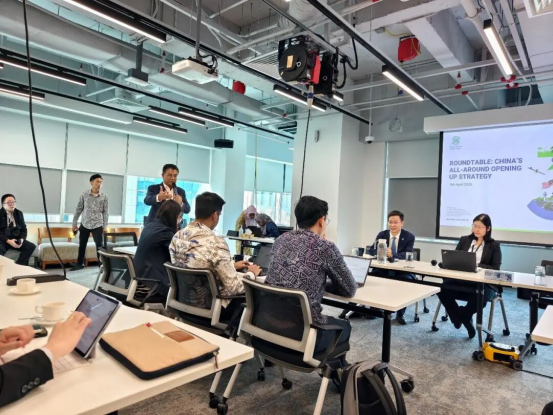
During the two�hour keynote session, Professor Yu Miaojie delivered an entirely impromptu speech in English. With detailed data and a broad perspective, he provided a profound analysis of the evolving global economic and trade landscape. He pointed out that despite the impact of high tariff barriers and unilateralism by certain countries, economic globalization based on product specialization and trade globalization had not come to an end. The current global trade structure has evolved into a tripartite pattern represented by the US�Mexico�Canada Agreement (USMCA), the European Union (EU), and the Regional Comprehensive Economic Partnership (RCEP). In the face of anti�globalization headwinds, China remains steadfast in advancing its “independent opening�up” strategy, serving as a firm defender and important engine of global free trade.
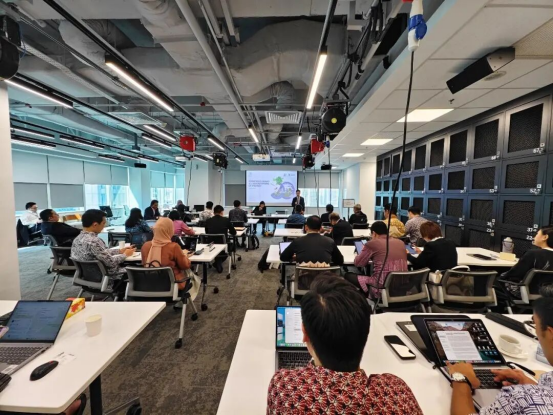
He provided an in‑depth summary of the new pattern of China’s all‑round opening‑up from six dimensions. First, China is diversifying its export destinations by shifting its trade focuses toward ASEAN, the “Global South,” and Russia. Second, it is actively expanding imports of high‑quality products and boosting domestic consumers’ sense of benefit and fulfillment through platforms such as the China International Import Expo. Third, efforts are being made to strengthen two‑way exchanges in tourism, education and other areas to address the deficit in services trade. Fourth, by leveraging its complete industrial‑chain clusters and continually shortening the negative list, China aims to attract high‑quality, capital‑ and technology‑intensive foreign investment. Fifth, the country is steadily expanding outward direct investment (ODI) to optimize the allocation of resources worldwide and promote the industrialization process of host countries such as ASEAN members. Sixth, China is advancing the high‑quality development of the Belt and Road Initiative, aligning with high‑standard rules such as those of the CPTPP, and promoting the upgrading of the Regional Comprehensive Economic Partnership (RCEP).
The subsequent interactive Q&A session was highly lively. Guests including Liew Chin Tong, Sim Tze Tzin, and Wing Thye Woo engaged in in�depth and candid discussions with Professor Yu on cutting�edge topics such as “China�Malaysia bilateral trade deficit,” “supply�chain integration and protection of the middle class,” and “the feasibility of managed trade.”
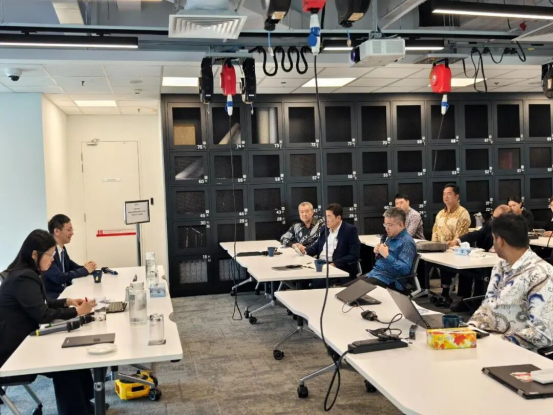
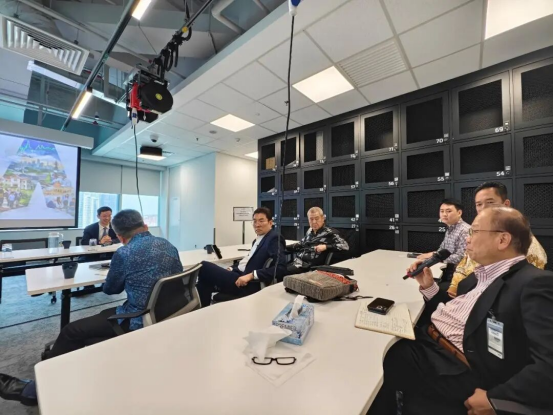
In response to the “overcapacity” narrative promoted by the West, Professor Yu provided a well�reasoned and professional rebuttal, clearly pointing out that this is essentially a “false proposition” resulting from suppressed external effective demand due to trade protectionism. He stated that China is comprehensively stimulating domestic demand potential by building a “unified national market,” combating corruption, and reducing institutional transaction costs. Regarding bilateral trade balance issues, he suggested adopting an overall perspective of global value�chain restructuring and encouraged Malaysia to further increase zero�tariff exports of distinctive agricultural products to China, attract outbound Chinese tourists through visa�free policies, and achieve two�way dynamic balance by expanding the “pie” of mutual benefit and win�win cooperation.
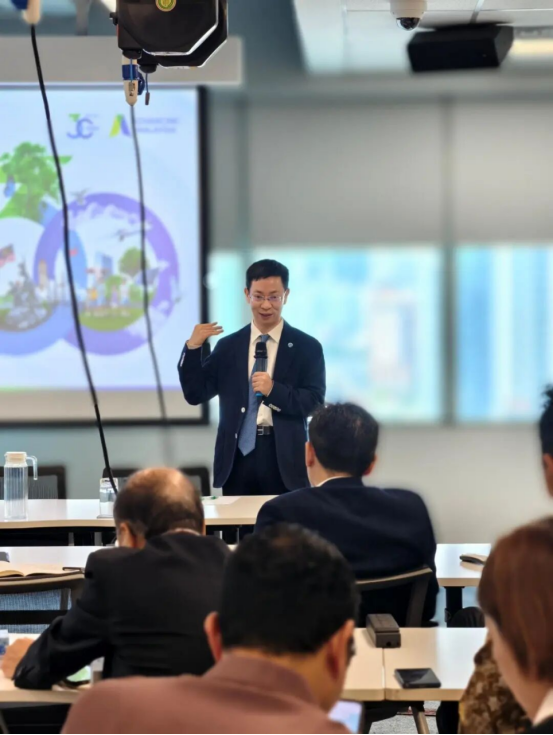
Professor Yu’s brilliant speech, which combined profound academic insight with macro�policy vision, resonated strongly with the Malaysian officials and think�tank experts present. The speech received enthusiastic applause and high praise from the audience, and after the event, attendees eagerly took photos with him.
This high�level think�tank dialogue and academic visit not only clearly and effectively conveyed to the international community China’s open philosophy of “inclusiveness, mutual benefit, and win�win cooperation”, but also provided valuable intellectual support for further deepening China�Malaysia economic, trade, investment, and strategic collaboration amid complex global circumstances.