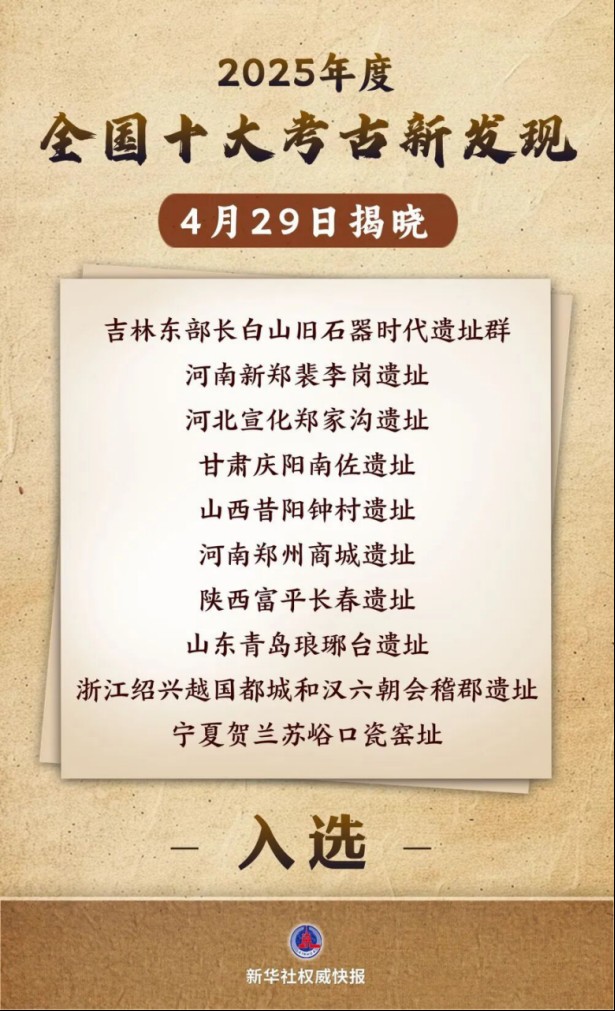
From April 28 to 29, the final evaluation meeting for the 2025 National Top 10 New Archaeological Discoveries was held in Beijing, jointly organized by China Cultural Relics News and the Society for Chinese Archaeology. Following project presentations, comprehensive assessments, and final voting by the judging panel, the 2025 National Top 10 New Archaeological Discoveries were announced, with the Paleolithic Site Cluster in the Eastern Changbai Mountains of Jilin Province selected as a laureate. Professor Xu Ting of the Faculty of History of Liaoning University (LNU) served as the principal investigator of the project. He undertook archaeological excavations and extensive field surveys at multiple sites, including the Dadong site in Helong, Shangtiandong site in Helong, and Fenglin site in Fusong, and delivered the project presentation at the final evaluation meeting.
The Changbai Mountains are located on the easternmost edge of the Eurasian continent, with major rivers such as the Tumen, Songhua and Yalu rivers. With unique volcanic lava landforms and rich biological resources, the region is a core area for studying Late Pleistocene hominin migration, lithic technology evolution and transregional cultural exchanges. Since 2021, supported by the Archaeological China program Investigation and Research on Hominin Sites in Changbai Mountains, Eastern Jilin, systematic breakthroughs have been made in Paleolithic archaeology here, completely revising the traditional academic understanding of prehistoric human activities in this area.
At the press conference, Chen Xingcan, Member of the Academic Division of the Chinese Academy of Social Sciences, commented: “The Paleolithic site cluster in Changbai Mountains has discovered a rare and unique obsidian lithic industry system in China, which proves the specialized mining, standardized production and refined utilization of high-quality raw materials by ancient humans. Raw material provenance confirms the bidirectional transregional circulation of Changbai Mountains obsidian, forming a resource and cultural exchange network covering Northeast China, the Russian Far East and the Korean Peninsula, filling the gap of prehistoric cultural exchanges in Northeast Asia. Located in the climate change zone of the Last Glacial Period, the site cluster completely records the process of hominin technological evolution, environmental adaptation and cultural exchanges, which is of great significance for analyzing the migration, diffusion and ecological adaptation of early modern humans in Northeast Asia during environmental transformation.”
Professor Xu Ting said that the Changbai Mountains Paleolithic archaeology project has fully established the regional Paleolithic cultural development sequence, clarified the lithic technology characteristics, subsistence patterns and cultural features of different periods, and confirmed the key hub status of Changbai Mountains in prehistoric hominin evolution and migration exchanges in Northeast Asia. Relying on abundant obsidian resources and a stable ecological environment, ancient humans in the Changbai Mountains region developed continuously from 220,000 years ago to 15,000 years ago, with continuous technological innovation and a smooth transition to the Neolithic Age, making it a key area of Paleolithic archaeology in China and even Northeast Asia.
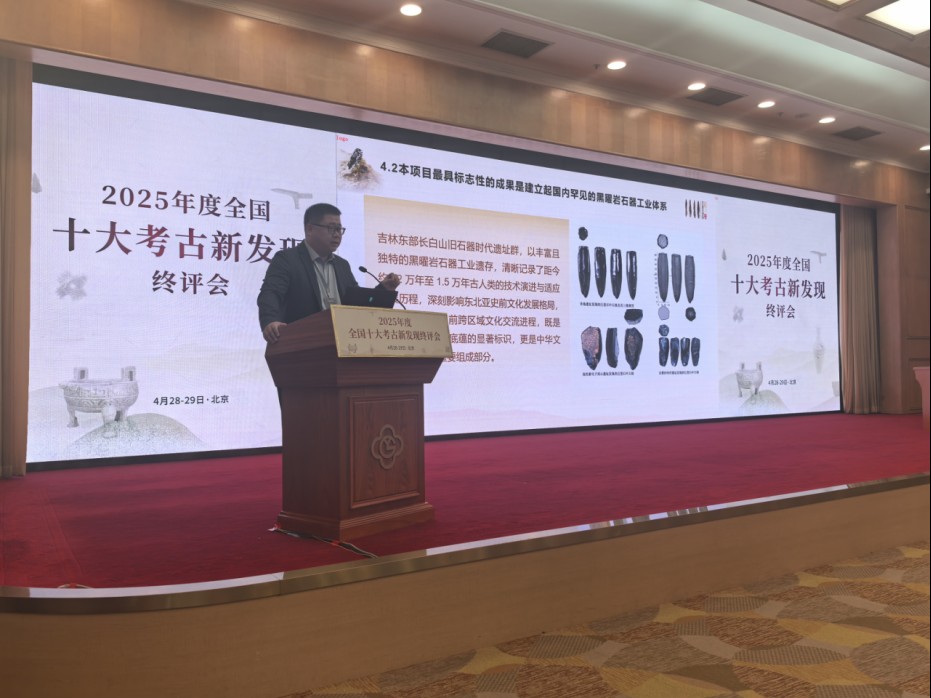
China’s Top 10 Archaeological Discoveries is an annual selection activity hosted by China Cultural Relics News and the Society for Chinese Archaeology, entrusted by the National Cultural Heritage Administration, since 1990. The selection aims to commend archaeological discoveries in China with important historical, artistic and scientific value of the year. Through rigorous preliminary evaluation, final evaluation and other links, 10 most representative achievements are selected from archaeological projects declared nationwide every year.