The Ministry of Education announced the results of the 2025 annual review and approval for undergraduate majors for institutions of higher education a few days ago. Liaoning University (LNU) received approval for three newly proposed majors: International Economic and Trade Rules, Auditing, and Robot Engineering. This addition represents a significant initiative for the university to align with national strategic needs, serve the comprehensive revitalization of Liaoning Province, and optimize the layout of its disciplines and majors. It will further improve the university’s system for cultivating interdisciplinary talent and enhance the alignment between major development and regional economic and social growth.
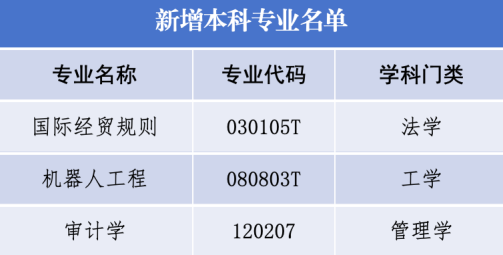
The International Economic and Trade Rules major is an interdisciplinary, fusion-oriented “New Liberal Arts” program developed in response to the national strategy of high-level opening-up and the need to build Liaoning into a hub for Northeast Asian open cooperation. With a training focus characterized by “Law, Economics and Trade, Foreign Languages and Regional Studies”, the major systematically constructs a four-dimensional curriculum system encompassing “Legal Foundations, Economic and Trade Practice, International Vision and Foreign Language Competence”. It prioritizes cultivating students’ core competencies in international rule negotiation, cross-border dispute resolution, corporate compliance governance, and foreign-related policy formulation. Graduates may pursue careers in international economic and trade law and management at government commerce departments, judicial organs, arbitration institutions, foreign-related law firms, and multinational enterprises. The program aims to provide high-caliber, interdisciplinary foreign-related rule-of-law talent to support Liaoning’s deep integration into the Belt and Road Initiative and the deepening of regional economic and trade cooperation in Northeast Asia.
The Auditing major is a key program established to meet the needs of modernizing the national governance system, fill the gap in high-end auditing talent in Liaoning, and upgrade the ecosystem of economics and management disciplines. Leveraging the university’s multidisciplinary strengths in accounting, applied economics, and law, the program builds a three-dimensional training framework of “Auditing Theory, Intelligent Technology and Governance Application”. It covers three core areas: government auditing, CPA auditing, and internal auditing, while emphasizing the application of digital and intelligent technologies such as R language, Python, and blockchain auditing. Graduates will be qualified for auditing and compliance management roles in government audit institutions, accounting firms, large and medium-sized state-owned enterprises, and financial institutions. The major is designed to provide professional talent support for the reform of state-owned capital and enterprises in Liaoning, performance supervision of major projects, and financial risk prevention and control.
The Robot Engineering major is a program anchored in the “Manufacturing Powerhouse” strategy and designed to support the upgrading of Liaoning’s advanced equipment manufacturing industry. Focusing on the whole-chain competency cultivation of robots, covering “Hardware Design, Software Programming, Algorithm Development, System Integration”, the curriculum spans core fields such as mechanical design, automatic control, artificial intelligence, and robot perception and navigation. The program is supported by practical teaching platforms including a Smart Manufacturing Comprehensive Training Platform and an Autonomous Driving Technology Laboratory. Graduates can engage in R&D, design, operation, maintenance, and management in fields such as industrial robots, humanoid robots, special robots, and smart equipment. This major aims to help Liaoning seize the commanding heights of the robotics industry and promote the intelligent transformation of its manufacturing sector.
In recent years, the university has thoroughly implemented the relevant deployments of the Ministry of Education and the Liaoning Provincial Government regarding the optimization of discipline and major settings. Guided by the Implementation Plan for the Optimization of Discipline and Major Setting Adjustment at LNU (2025–2027), the university continues to advance the supply-side structural reform of its majors. It has gradually formed a professional system led by first-class disciplines, supported by clusters of advantageous and distinctive majors, and driven by emerging interdisciplinary majors, continuously enhancing the alignment between talent cultivation and regional development demands.