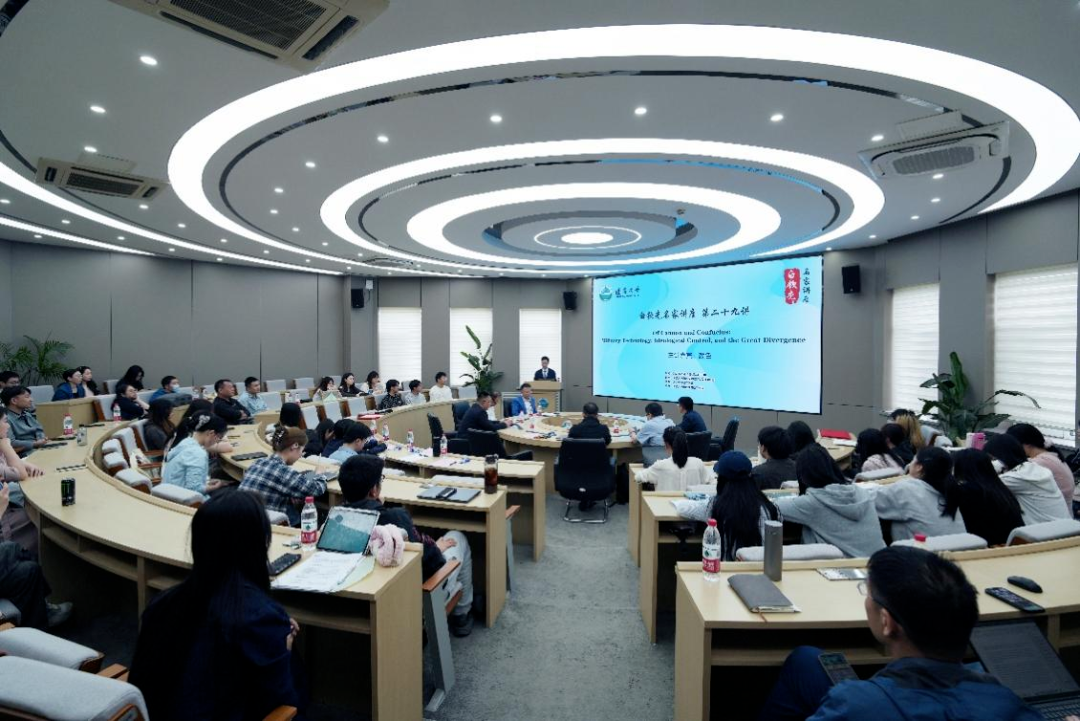
The 29th installment of the “Bai Qinxian Distinguished Lecture Series” was recently held at the Puhe Campus of Liaoning University. Professor Yan Se, Research Fellow at Guanghua School of Management, Deputy Director of the Institute of Economic Policy and the Comparative Economic History Research Center at Peking University, as well as Vice President of the Chinese Economic History Society, was invited as the keynote speaker. Professor Yu Miaojie, Deputy Secretary of the Party Committee and President of Liaoning University, attended the lecture and delivered an opening address. Vice President, professor Qiu Huanguang attended the lecture. The lecture was hosted by Professor Dong Baomin, Deputy Director of the Division of Economics.
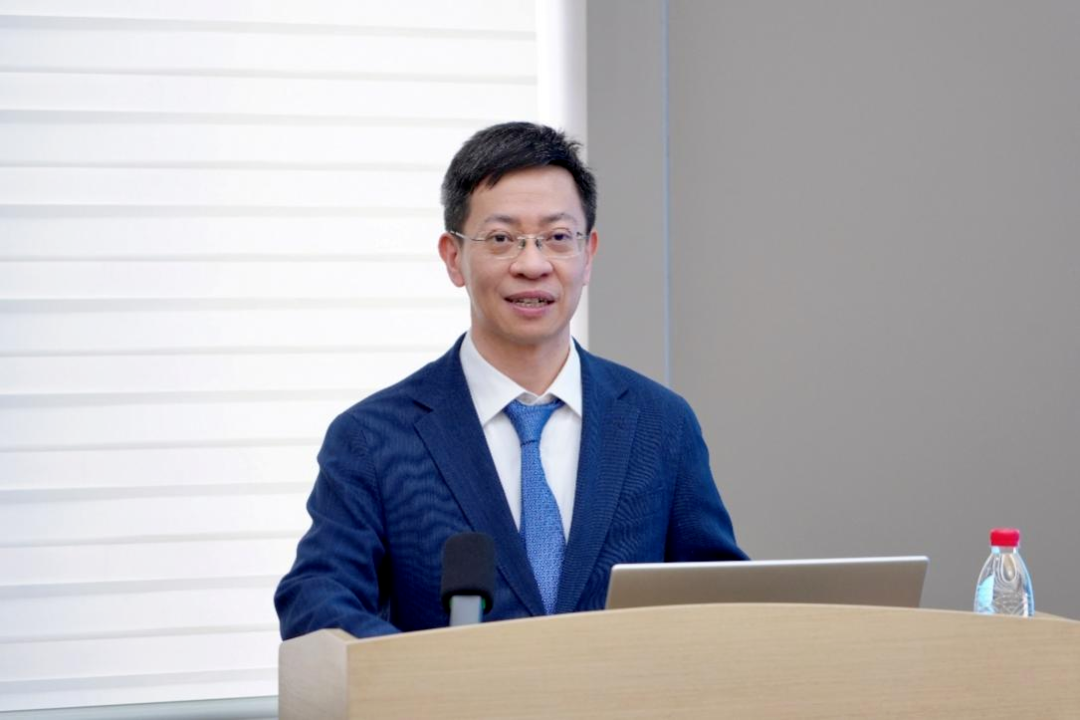
During the address, Yu Miaojie delivered a formal introduction to Professor Yan Se’s academic background and research accomplishments. Specializing in economic history, macroeconomics and China’s economy, Professor Yan boasts an impressive portfolio of scholarly output. He has published several well-known monographs, including Macroeconomics and China’s Policy and The Visible Hand: Insights into China’s Financial History, alongside dozens of papers published in top-tier domestic and international journals such as the Journal of International Economics, Economic Research Journal and Management World. Furthermore, Professor Yan serves as the chief principal investigator for Foreign Trade Volume of the Qing History, a key component of the national project to revise the official Qing Dynasty History. Yu Miaojie spoke highly of Professor Yan, noting that he has consistently aligned his academic pursuits with the nation’s development imperatives. His internal policy advisory reports have repeatedly secured important instructions from China’s top state leaders, furnishing valuable intellectual support for the CPC and the country’s macroeconomic decision-making.
Thereafter, Professor Yan engaged in an insightful academic exchange with faculty and students of Liaoning University centered on his talk titled Of Cannon and Confucius: Military Technology, Ideological Control, and the Great Divergence, sharing cutting-edge academic perspectives.
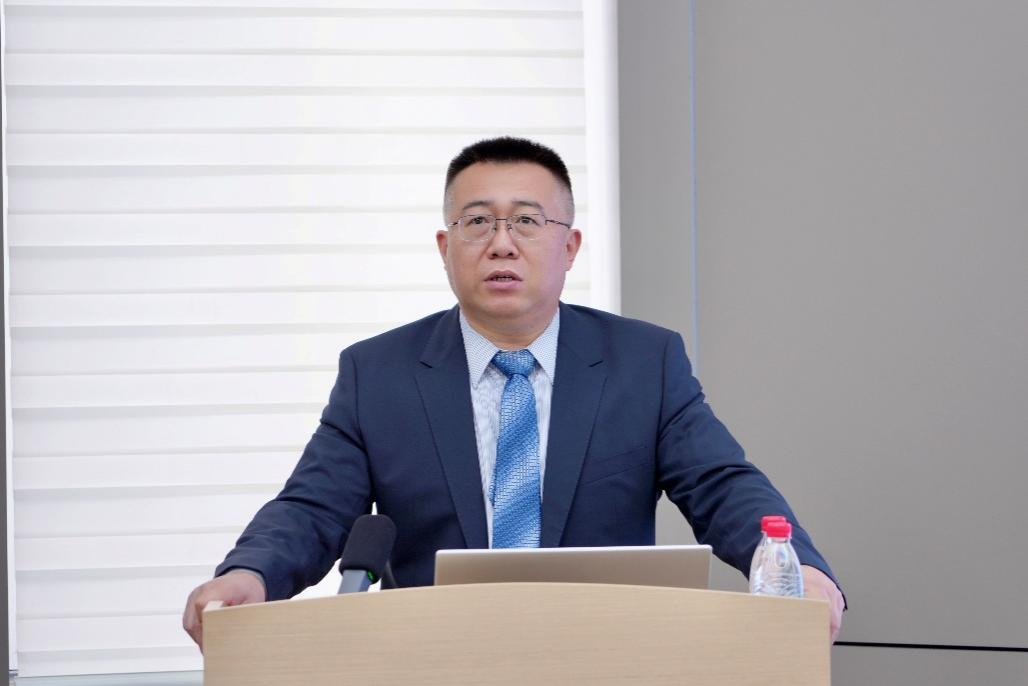
In his presentation, Professor Yan Se broke away from conventional research perspectives rooted in institutional determinism or geographic determinism to delve into core academic questions. He systematically reviewed canonical theories from the Institutional School, California School and Supply-side School, before proposing a pivot toward the analytical framework centered on warfare, demand for military technology and state investment strategies. By constructing a dynamic model featuring trade-offs between military technology advancement and ideological governance, he offered a fresh interpretation of the origins of the Great Divergence. Professor Yan pointed out that recurrent armed conflicts and political fragmentation across European states compelled continuous state investment in military research and development, inadvertently fostering the fiscal-military state capacity and technological spillovers that laid groundwork for the Industrial Revolution. By contrast, the Qing Dynasty, enjoying territorial unification with diminished external perils and mounting domestic governance obligations, rationally diverted resources away from capital-intensive, high-risk military innovation toward low-cost, reliably effective ideological indoctrination. Although this state strategy prioritizing ideological cultivation over firearms production achieved domestic stability for a certain period, it stalled the advancement of military technology, finally leading to a formidable technological gap opened between Qing and Western industrial powers in the post-Industrial Revolution era.
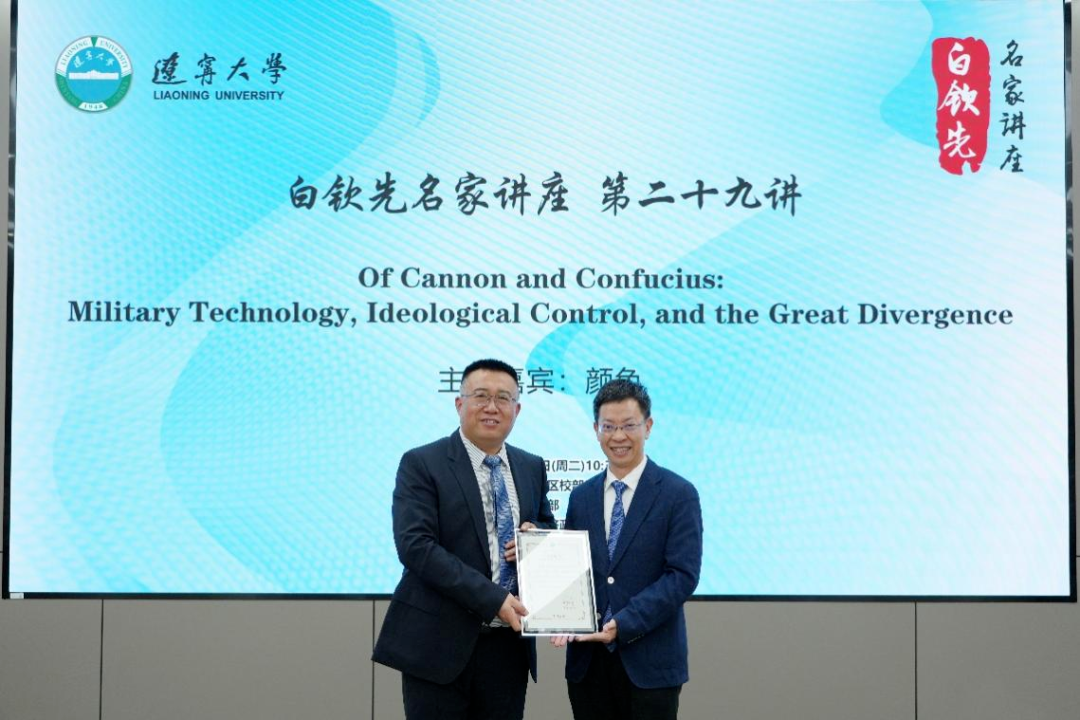
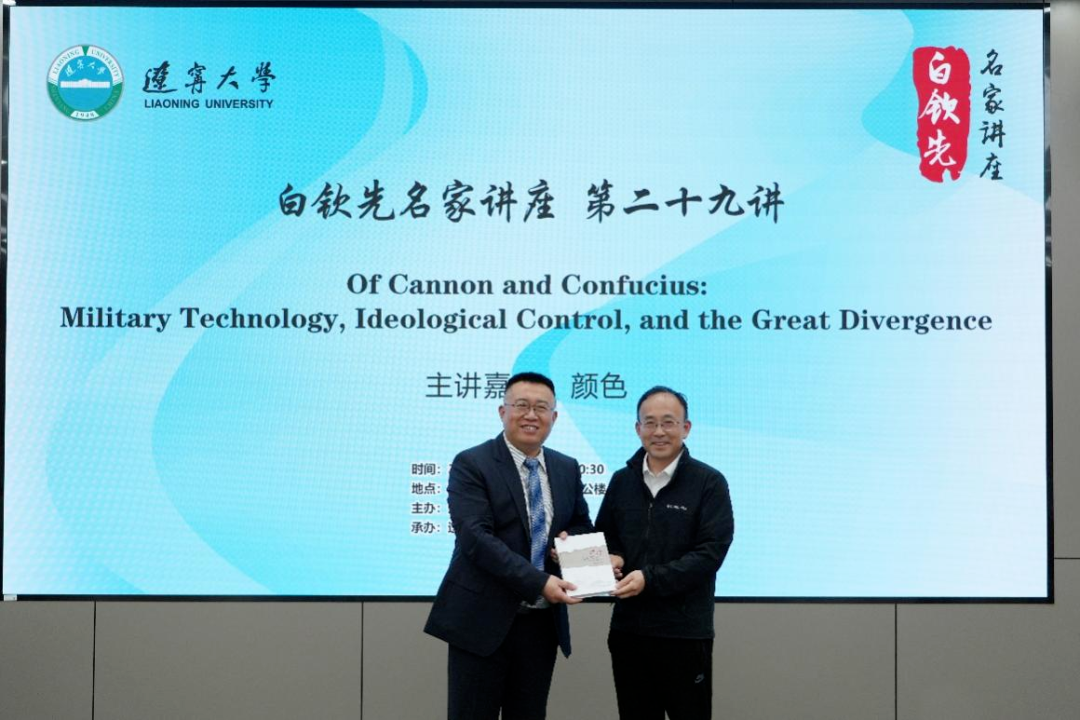
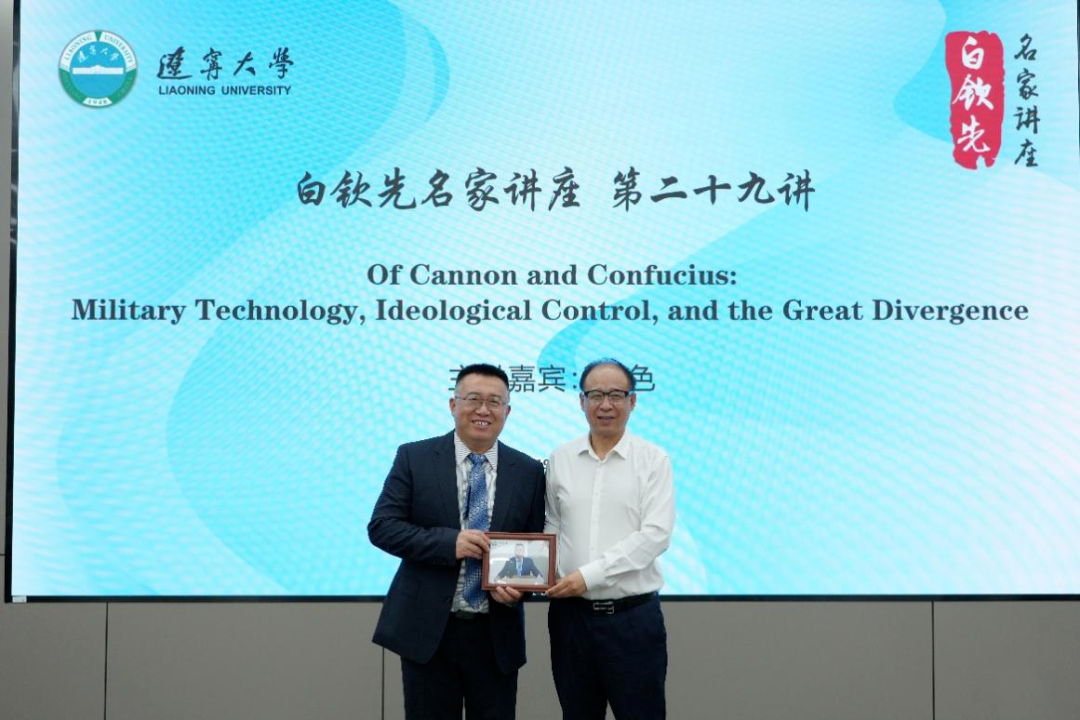
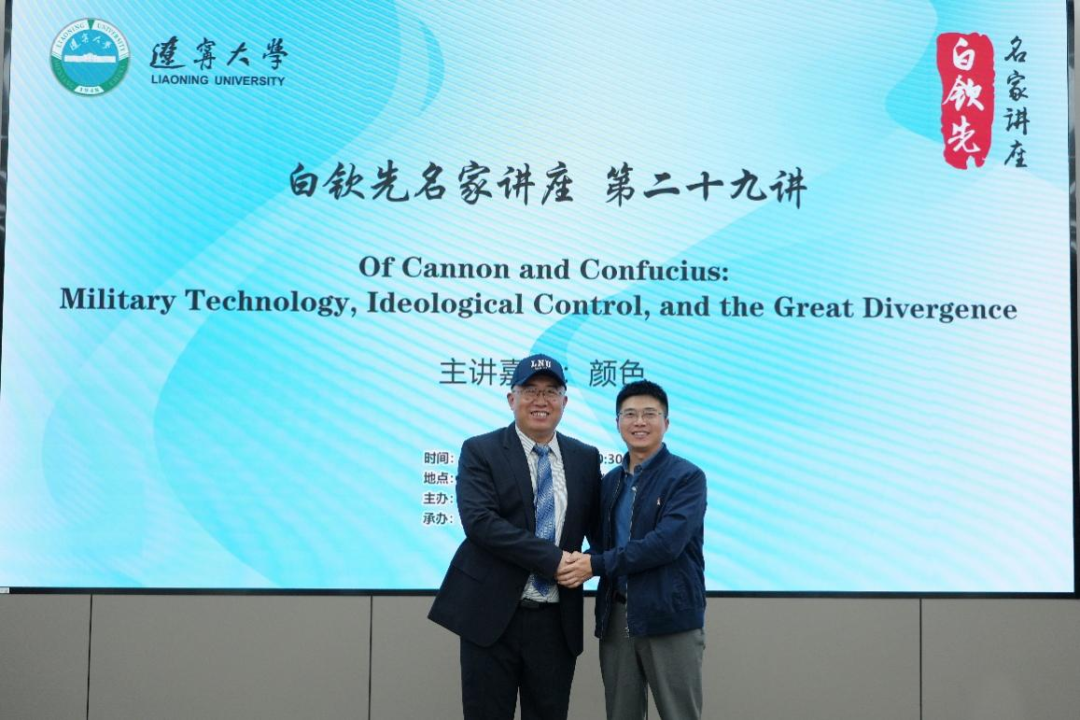
Upon the conclusion of the lecture, Yu Miaojie presented Professor Yan Se with a commemorative certificate. Qiu Huanguang gifted him the book Humanities and Economy of Liaoning. Liu Wenge, Dean of the School of International Economics and Politics, offered a commemorative photo as a souvenir, while Yang Gongyan, Deputy Dean of the School of International Economics and Politics, presented a university-branded cap to the professor.
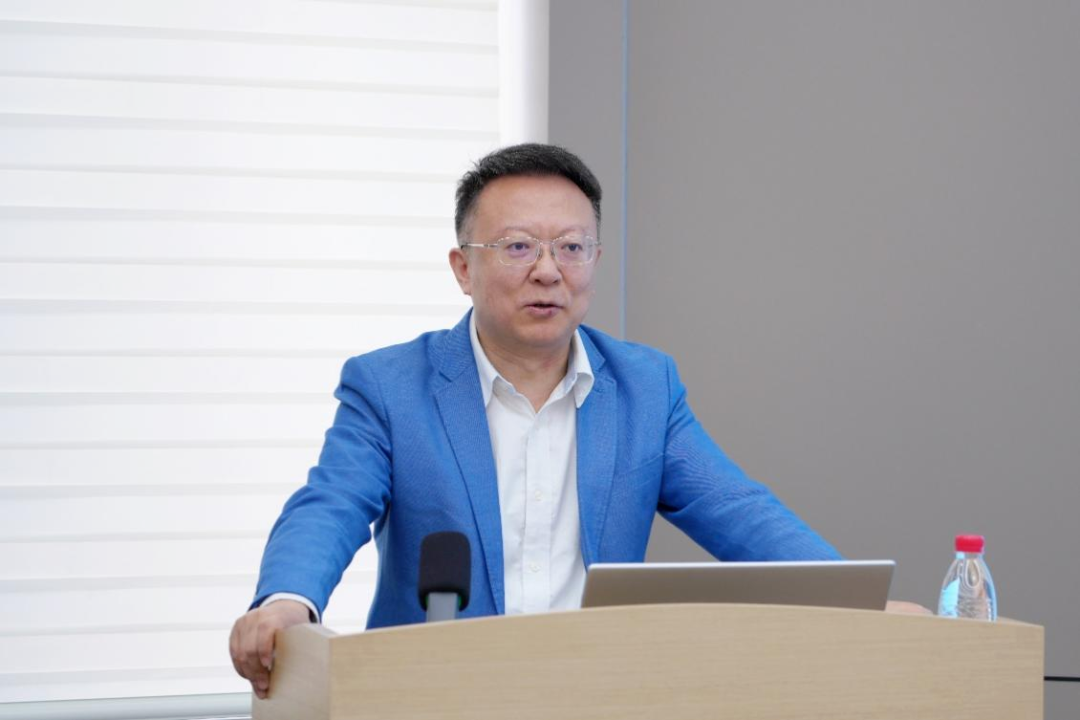
presiding by Professor Dong Baomin (Deputy Director, Division of Economics)
Co-hosted by the Office of Social Science Research and the Division of Economics, undertaken by the School of International Economics and Politics, the lecture drew over 60 faculty and student representatives from affiliated institutions under the Division of Economics.
Brief Introduction to the Guest Speaker
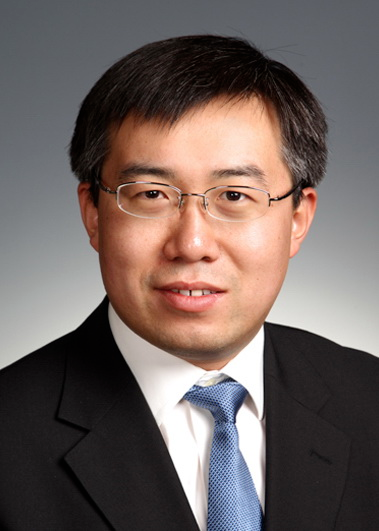
Yan Se, Young Yangtze Scholar of the Ministry of Education, serves as Research Fellow, Associate Professor and Doctoral Supervisor at Guanghua School of Management, Peking University. He currently holds concurrent posts as Deputy Director of Peking University Institute of Economic Policy, Deputy Director of Peking University Center for Comparative Economic History, Vice President of the Chinese Economic History Association, and Executive Committee Member of the International Economic History Association. Previously, he worked as Senior Economist at Standard Chartered Bank and Chief Economist at Founder Securities. His research centers on economic history, macroeconomics and China’s economy. He was awarded the Best Dissertation Prize at the World Economic History Congress, becoming the first Chinese scholar to receive this honor. Professor Yan has published numerous articles in leading domestic and international journals including the Journal of International Economics, International Economic Review, Economic Research Journal, Management World and Studies in Qing History, alongside monographs such as Macroeconomics and China’s Policy and The Visible Hand: Insights into China’s Financial History. His research projects have received financial support from the US National Science Foundation, National Natural Science Foundation of China, National Social Science Fund of China and Humanities and Social Sciences Fund of the Ministry of Education. In addition, Dr. Yan integrates academic research with applied policy analysis. He has long provided economic policy consultation and analytical services for relevant state authorities and financial markets, with in-depth expertise in macroeconomic policymaking, monetary affairs, finance and foreign exchange markets. His research reports have earned important official instructions from senior policymakers and garnered positive responses from industry practitioners.